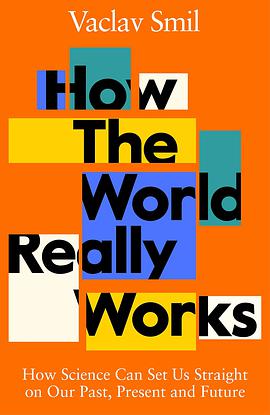
How Science Can Set Us Straight on Our Past, Present and Future
Vaclav Smil
簡介
We have never had so much information at our fingertips and yet most of us simply don't understand how our world really works. Professor Vaclav Smil is not a pessimist or an optimist, he is a scientist, and this book is a much-needed reality check on topics ranging from food production and nutrition, through energy and the environment, to globalization and the future. For example, the carbon footprint of meat is well known, but did you know that the equivalent of five tablespoons of diesel fuel goes into the production of each greenhouse-grown, medium-size, supermarket-bought tomato? The gap between belief and reality is vast.
Drawing on the latest science, tackling sources of misinformation head on and championing a rational, fact-based approach, in How the World Really Works Smil shows, for example, why the planet isn't 'suffocating' (even burning all the planet's fossil fuels would reduce oxygen levels by just 0.25 per cent) and that globalization isn't 'inevitable' and nor should it be (the stupidity of allowing 70 per cent of the world's rubber gloves to be made in just one factory became glaringly obvious in 2020).
Ultimately, Smil answers the most profound question of our age: are we irrevocably doomed or is a brighter utopia ahead? Compelling, data-rich and revisionist, this wonderfully broad, interdisciplinary masterpiece finds faults with both extremes. Looking at the world through this quantitative lens reveals hidden truths that change the way we see our past, present and uncertain future.
contents
Introduction: Why Do We Need This Book?
1. Understanding Energy: Fuels and Electricity
2. Understanding Food Production: Eating Fossil Fuels
3. Understanding Our Material World: The Four Pillars of Modern Civilization
4. Understanding Globalization: Engines, Microchips, and Beyond
5. Understanding Risks: From Viruses to Diets to Solar Flares
6. Understanding the Environment: The Only Biosphere We Have
7. Understanding the Future: Between Apocalypse and Singularity
Appendix: Understanding Numbers: Orders of Magnitude
References and Notes
Acknowledgements
Index