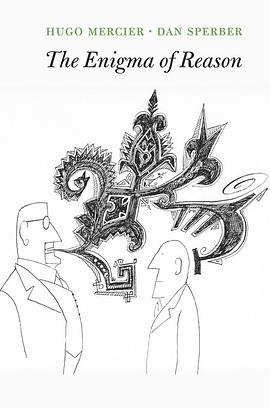
Hugo Mercier / Dan Sperber
sinopsis
Reason, we are told, is what makes us human, the source of our knowledge and wisdom. If reason is so useful, why didn’t it also evolve in other animals? If reason is that reliable, why do we produce so much thoroughly reasoned nonsense? In their groundbreaking account of the evolution and workings of reason, Hugo Mercier and Dan Sperber set out to solve this double enigma. Reason, they argue with a compelling mix of real-life and experimental evidence, is not geared to solitary use, to arriving at better beliefs and decisions on our own. What reason does, rather, is help us justify our beliefs and actions to others, convince them through argumentation, and evaluate the justifications and arguments that others address to us.
In other words, reason helps humans better exploit their uniquely rich social environment. This interactionist interpretation explains why reason may have evolved and how it fits with other cognitive mechanisms. It makes sense of strengths and weaknesses that have long puzzled philosophers and psychologists—why reason is biased in favor of what we already believe, why it may lead to terrible ideas and yet is indispensable to spreading good ones.
Ambitious, provocative, and entertaining, The Enigma of Reason will spark debate among psychologists and philosophers, and make many reasonable people rethink their own thinking.
contents
Introduction: A Double Enigma
I. Shaking Dogma
1. Reason on Trial
2. Psychologists’ Travails
II. Understanding Inference
3. From Unconscious Inferences to Intuitions
4. Modularity
5. Cognitive Opportunism
6. Metarepresentations
III. Rethinking Reason
7. How We Use Reasons
8. Could Reason Be a Module?
9. Reasoning: Intuition and Reflection
10. Reason: What Is It For?
IV. What Reason Can and Cannot Do
11. Why Is Reasoning Biased?
12. Quality Control: How We Evaluate Arguments
13. The Dark Side of Reason
14. A Reason for Everything
15. The Bright Side of Reason
V. Reason in the Wild
16. Is Human Reason Universal?
17. Reasoning about Moral and Political Topics
18. Solitary Geniuses?
Conclusion: In Praise of Reason after All
Notes
References
Acknowledgments
Illustration Credits
Index